
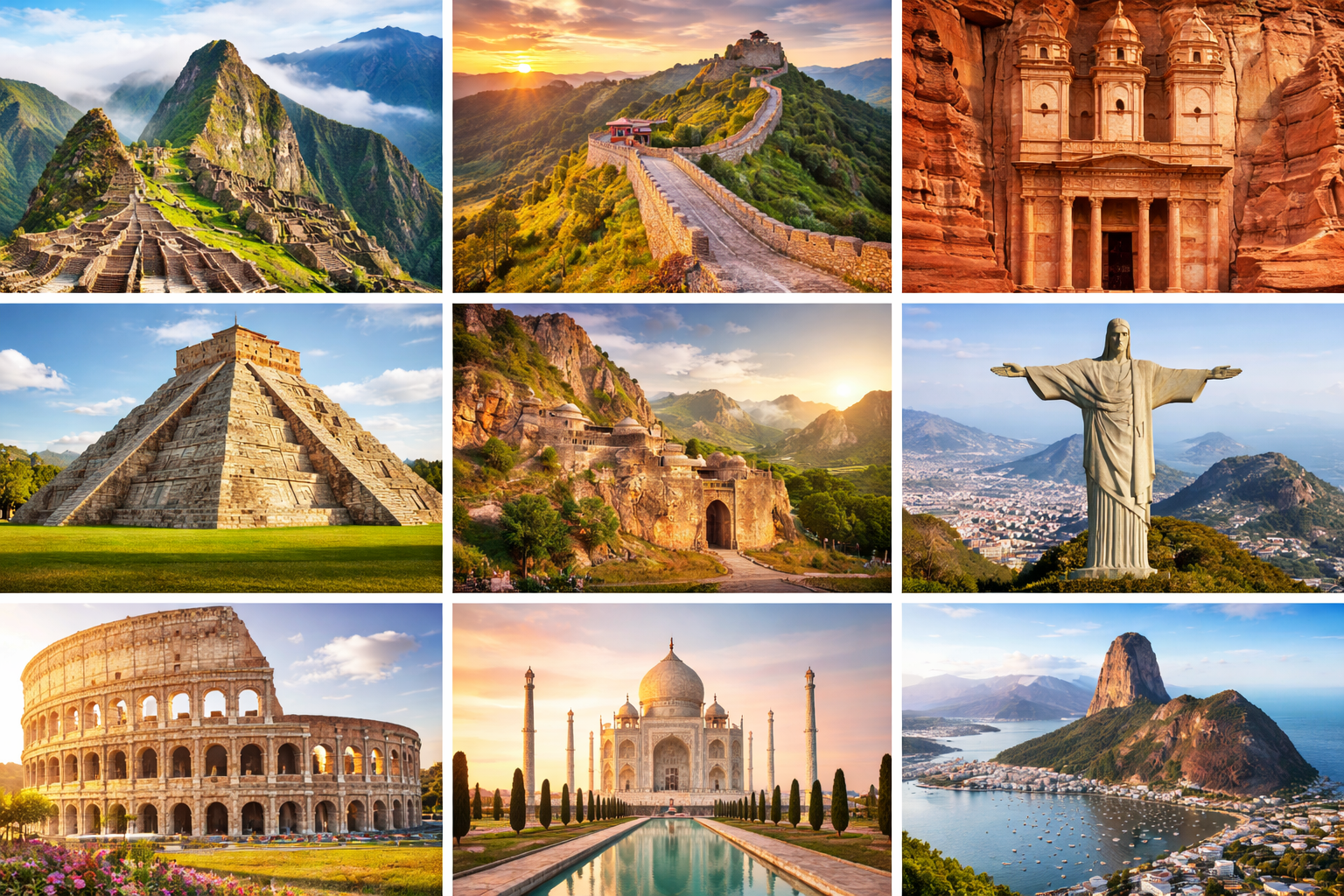
Around the world, there are places that stand out because of their history, scale, and cultural meaning. These locations are often referred to as the Seven Wonders of the World. They were selected to represent some of the most remarkable achievements created by human societies across different periods of history. Each of these places reflects not only technical skill, but also the values, beliefs, and ambitions of the people who built them.
Today, the Seven Wonders attract millions of visitors every year. People travel long distances to see them, not only for their visual impact, but also to better understand the civilizations behind them. Although these sites are located on different continents, they share one thing in common: they continue to shape how we think about history, culture, and human creativity.
Below is a clear and accessible overview of the Seven Wonders of the World and where each one is located.
Great Wall of China
The Great Wall of China is located in northern China and stretches across mountains, deserts, and plains. It was built over many centuries, beginning as early as the 7th century BCE, with different sections constructed by various dynasties. The primary purpose of the wall was to protect Chinese states from invasions and raids from the north.
The wall is made from stone, brick, earth, and other locally available materials. Its design varies depending on geography, with stronger stone structures in mountainous regions and compacted earth in flatter areas. In total, the Great Wall extends for more than 13,000 miles, making it one of the longest man made structures ever built.
Today, the Great Wall is one of the most visited historical sites in the world. Some sections have been carefully restored, while others remain in a more natural, weathered state. Together, they offer insight into ancient defensive strategies and long term construction efforts.