
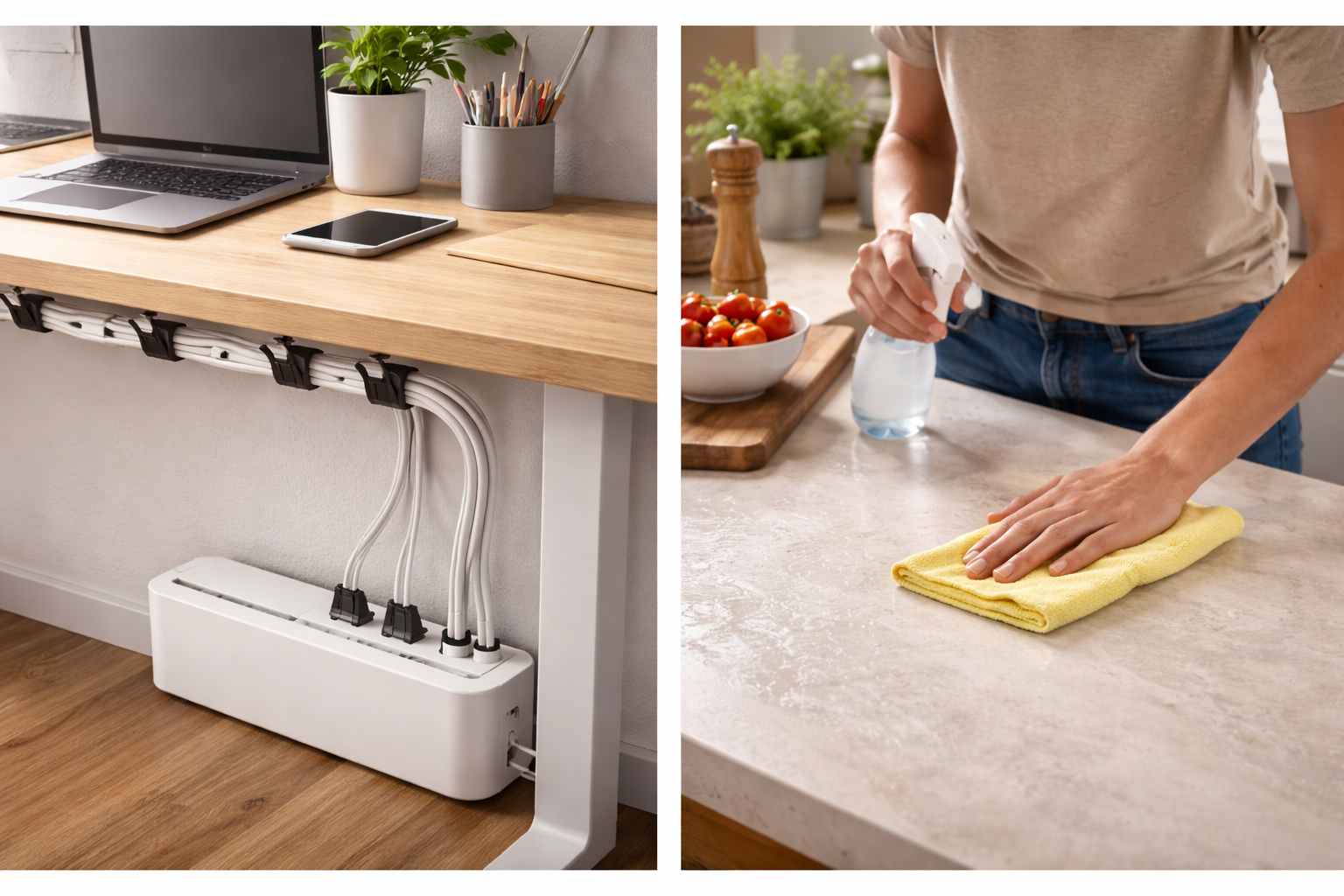
 Two Simple Home Tricks That Improve Daily Life
Small household tricks are often the most effective because they fit naturally into everyday routines. They do not require special tools, expensive products, or major changes. Instead, they focus on small adjustments that reduce friction in daily life. When these tricks are repeated regularly, they can make a home feel calmer, cleaner, and easier to manage.
Many people think home improvement requires large projects or full reorganizations. In reality, small habits often have a greater long term impact. Simple solutions that work with daily behavior are more likely to stick. Below are two practical home tricks that many people rely on because they are realistic, easy to maintain, and useful in almost any household.
Keep cables organized and under control
Cables are one of the most common sources of visual clutter in modern homes. With phones, laptops, televisions, routers, lamps, and other electronic devices, cables often gather behind desks, under tables, and near power outlets. Over time, they can become tangled, dusty, and difficult to manage.
This clutter does not only affect appearance. Loose cables can make cleaning more difficult and create frustration when devices need to be unplugged, moved, or replaced. Searching for the right cable or untangling wires can quickly become an unnecessary interruption.
A simple solution is to keep cables grouped and guided in a clear direction. Using basic clips, ties, or holders helps keep cables together and prevents them from slipping onto the floor. These tools are small, inexpensive, and easy to install. They help create order without changing how devices are used.
Attaching cables to the edge or underside of a desk keeps work surfaces clear and makes the area easier to clean. Dust does not collect as easily, and vacuuming or wiping the floor becomes simpler. This is especially useful in home offices, media areas, and workspaces where multiple devices are connected at the same time.
Labeling or loosely separating cables can also be helpful. When devices need to be unplugged or adjusted, it becomes clear which cable belongs to which device. This saves time and reduces frustration, particularly in shared spaces or households with many electronics.
The key to this trick is consistency. Once cables are organized, keeping them in place becomes part of normal use. Small adjustments, such as guiding a new cable along the same path, help maintain order without extra effort.