
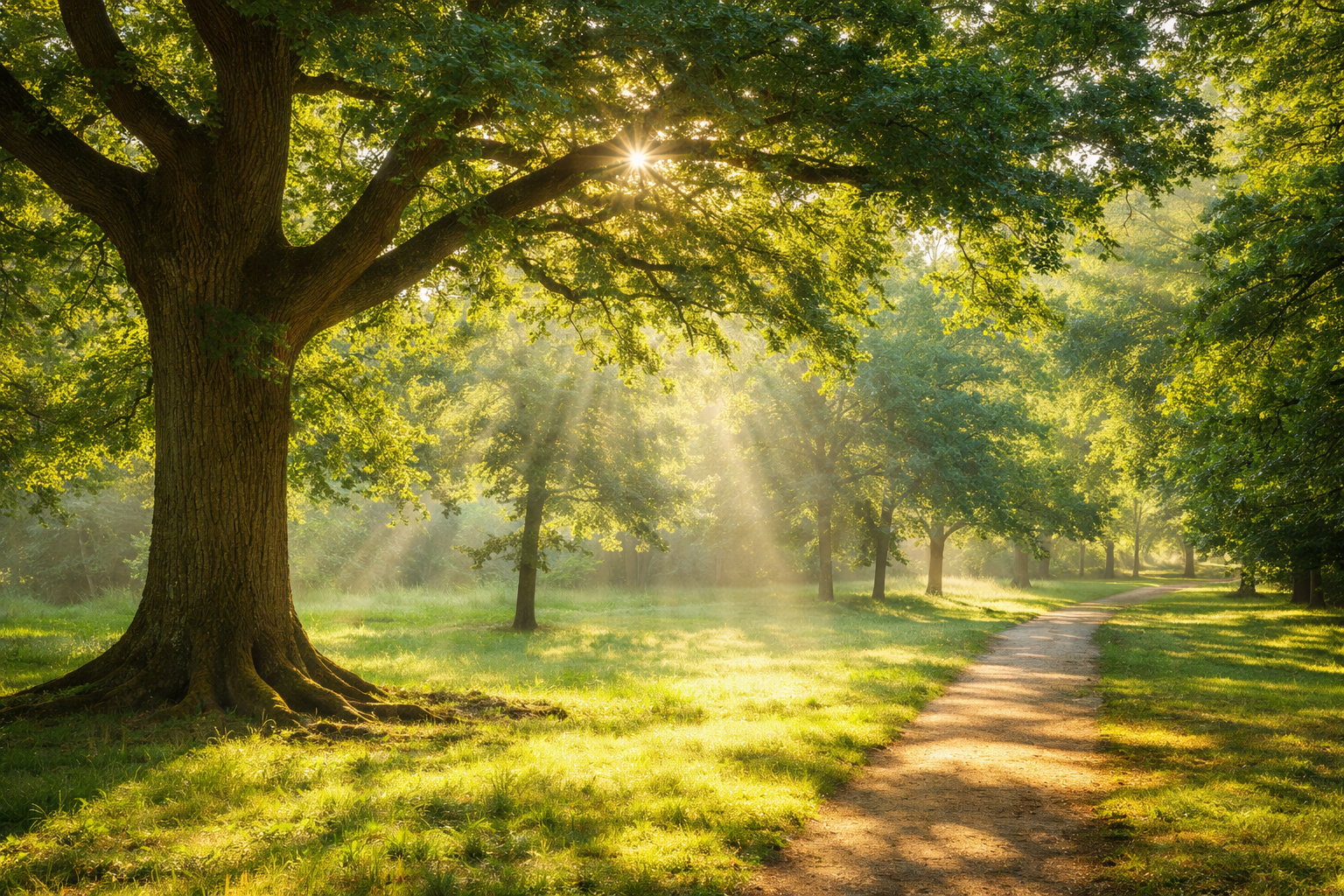
Trees are easy to overlook because they are present almost everywhere. Along streets, in parks, behind houses, and across wide natural landscapes, trees quietly form the background of daily life. Because they are so common, their importance is often underestimated. Yet trees play a steady and essential role in shaping environments, supporting ecosystems, and influencing how spaces feel and function.
Unlike many other plants, trees grow slowly and remain in place for long periods of time. Their presence reflects years, sometimes centuries, of growth and adaptation. Even without drawing attention, trees continue to respond to changes in their surroundings and contribute to balance in subtle ways.
From a biological point of view, trees are long living plants with a solid woody trunk and a branching structure that supports leaves or needles. Their growth takes place gradually, often over decades. A tree growing in an open field will develop a wide shape with strong branches, while the same species growing in a dense forest may grow taller and slimmer. These differences are shaped by light, space, wind, and competition with nearby trees.
Growth and change over time
A tree begins its life as a seed. When conditions are right, the seed absorbs water and starts to develop roots that grow downward into the soil. At the same time, a small stem grows upward toward light. This early stage is slow and delicate, but once roots are established, growth becomes more stable.
Unlike many plants that complete their life cycle within a single season, trees grow over many years. Their shape is influenced by soil quality, climate, water availability, wind exposure, and sunlight. Storms may bend branches, dry periods may slow growth, and rich soil can support stronger development.
Seasonal change plays an important role in how trees function. In regions with distinct seasons, some trees lose their leaves each year. This process helps conserve energy during colder or drier periods. Other trees remain green throughout the year, adapting in different ways to temperature changes. These patterns are not random but are part of long term survival strategies developed over time.